|
xx |
| Wildlife Sightings |
|
Bird News
|
| xx |
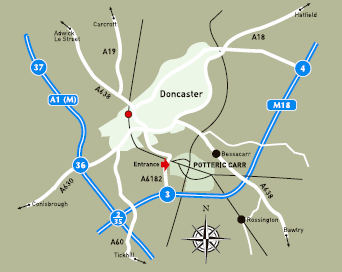
Potteric Carr is a nature reserve of Yorkshire Wildlife Trust (YWT) and almost sixty per cent is a Site of Special Scientific Interest (SSSI). It is situated just two miles (3¼ km) south-east of Doncaster town centre, close to the M18 and A1M motorways (see map below for directions).
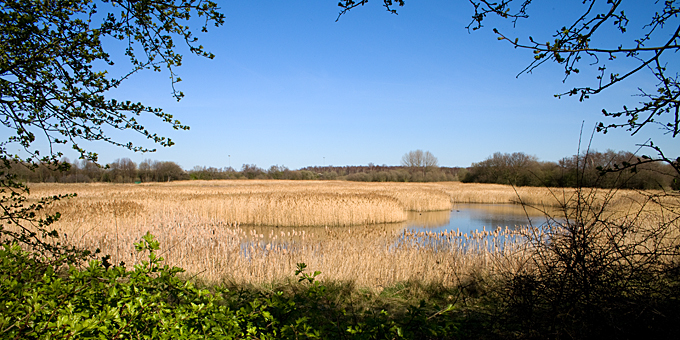
The Reserve geology is of Sherwood Sandstone, with marls, clays and peat overlaying this Triassic bedrock. Potteric Carr is low-lying and, historically, had a fenland character before drainage in the 1760s. Today, its principal habitats comprise areas of open water, Phragmites reed fen and swamp, slow flowing drains and ditches, wader scrapes, neutral grassland, willow and alder carr wet woodland, birch Betula woodland, and a stand of mature oaks Quercus planted in 1834. Disused railway embankments built with Magnesian Limestone are also a feature of the site. This wide range of habitats covering an area of over 500 acres (203ha), give it a rich diversity of wildlife. In addition, Potteric Carr's footpaths through a protected environment make it an ideal venue for all kinds of visitors ranging from those who simply enjoy a walk in the outdoors to the wildlife enthusiast and nature photographer.
Phragmites reedbeds, Potteric Carr NR. © Allan Parker ARPS
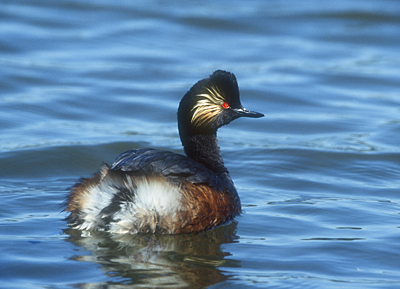
Since 1968, 230 bird species have been recorded at Potteric Carr, 102 of which are known to have bred on the nature reserve; warblers (including Cetti's Warbler), woodpeckers (including Lesser Spotted Woodpecker), Willow Tit, Kingfisher, Little Ringed Plover, Avocet, Oystercatcher, ducks (including Pochard), grebes (including Black-necked Grebe) and Water Rail. Wintering birds include Bittern, wildfowl, and sizable flocks of Lapwing and Golden Plover. There is a large insect and invertebrate fauna, including 21 species of dragonfly (of which 17 species are known to have bred); 29 species of butterfly including Brown Argus and Purple Hairstreak; a large population of moths, with 750 species recorded, and a wide range of other insects including over 100 rare and key species noted in the past ten years. Ninety-seven species of spider have also been recorded. Mammals include Harvest Mouse, Water Shrew, Water Vole, Daubenton's Bat and Roe Deer. Great Crested Newt is resident. The Reserve also has records of some 322 species of fungi, and a wide variety of plants, including a number of uncommon species, such as Greater Tussock Sedge, Water Violet, Greater Spearwort, Marsh and Bee Orchid.

Bittern (left) © Adrian Andruchiw and Black-necked Grebe © Allan Parker ARPS, both at Potteric Carr
About the Potteric Carr Wildlife website
This independent website was developed by a number of volunteers at Potteric Carr to promote the nature reserve and provide an up-to-date wildlife sightings page for visitors. It has evolved to specialise in the wildlife of Potteric Carr nature reserve and is overseen by an informal group of amateur naturalists, some of whom are also photographers, all with many years of knowledge about the site and the species present within their division of natural science. They are also the keepers of definitive site Species Lists published here on Potteric Carr Wildlife.
We encourage participation by visitors to the Reserve, such as recording your observations of flora and fauna. This can be done by simply emailing your sightings to one of the page editors whose contact addresses can be found on the News pages of this website, or by taking part in various surveys carried out at Potteric Carr each year. Monitoring forms for these surveys are usually available on one of the relevant observation hide notice boards. Your records can add to our wildlife databases which, in turn, build up a more accurate picture of the state of nature at Potteric Carr.
The Wildlife and Bird News pages are intended to give an insight into what has been seen recently on the Reserve so that you can look out for these when planning a visit. The news pages also provide topical photographs (often taken by visitors) and through the year illustrate each distinct season at Potteric Carr. We hope that you enjoy viewing this website and we especially look forward to hearing about your wildlife sightings and photographs taken at Potteric Carr.

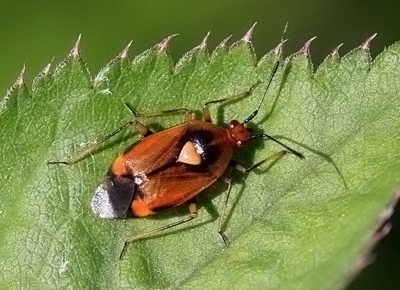
Ox-eye Daisy (left) © Allan Parker ARPS and Mirid Bug © Derek Bateson
Directions to Potteric Carr by road
This website is edited by Potteric Carr volunteers and sponsored by Papyrus Tours and ASPphoto Images of Nature. Copyright rests with several authors, and text/photographs should not be reproduced without prior permission. Potteric Carr Wildlife website is independent of Yorkshire Wildlife Trust and the staff at Potteric Carr Nature Reserve. The opinions expressed here are those of individual volunteers. Any comments concerning YWT or the Reserve and its operation should be addressed to the staff at Potteric Carr or the Trust's Head Office in York www.ywt.org.uk
Latest Posts: